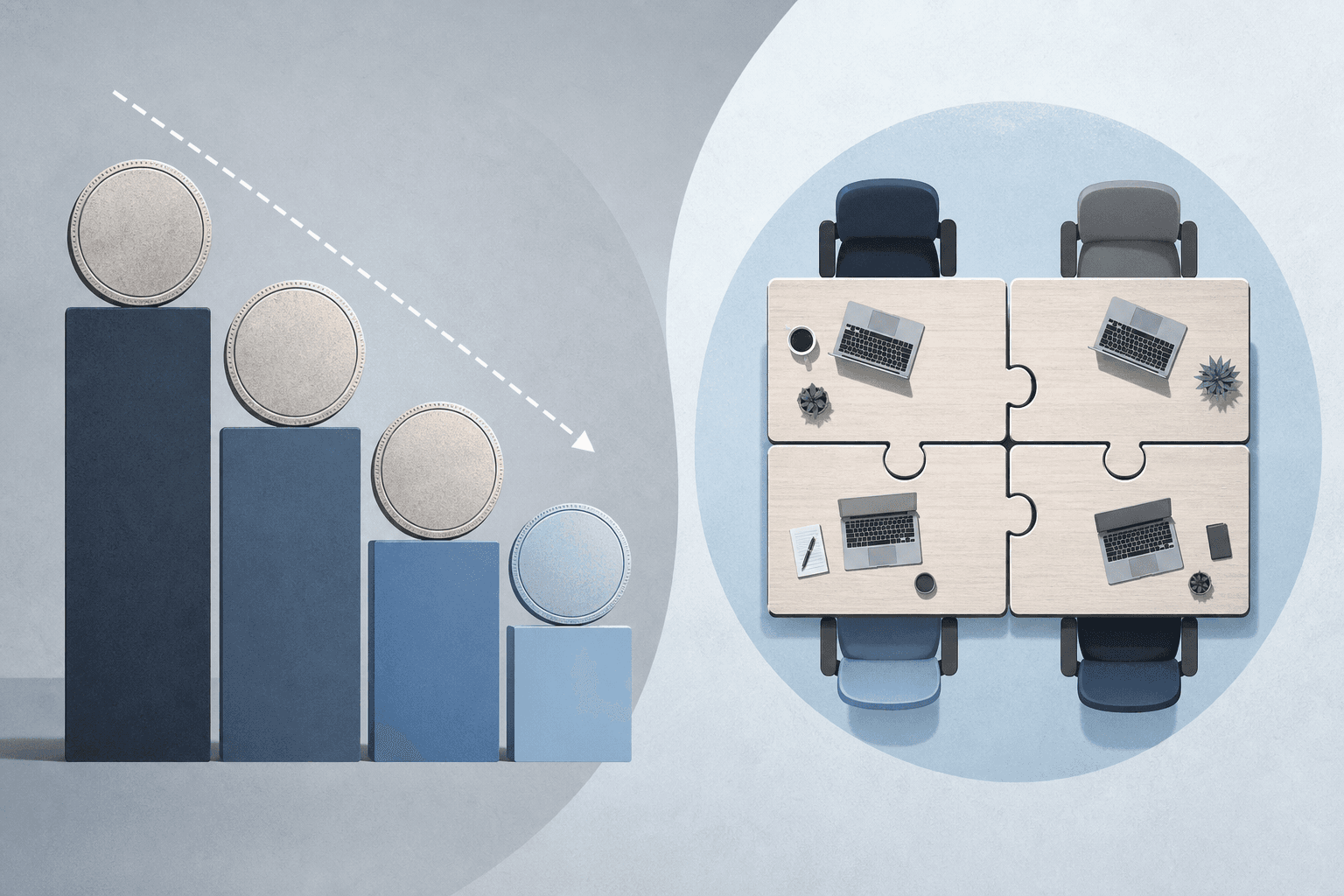
For many companies the office is one of the largest fixed costs after payroll. At the same time, large parts of many floors sit empty several days a week. Hybrid work has changed how people use the workplace, yet many organisations still pay for space that is not fully utilised.
That is why more teams are looking at shared offices and coworking as a way to cut costs without sacrificing the working environment.
Sharing space is no longer only for startups and freelancers. Established businesses also use flexible workplaces to lower risk, use resources better, and keep more freedom.
Lower rent
The most obvious saving is rent. Sharing premises with other companies can significantly reduce cost per square metre. Instead of taking a large dedicated office on a long lease, firms can match space to actual need.
With hybrid work that can make a big difference. If only half the team is on site at once, there is often little reason to pay for a floor sized for everyone.
Many organisations find they can materially reduce occupancy cost by:
- Sharing meeting rooms
- Using flexible desks
- Cutting unused area
- Avoiding long leases
Lower operating and service costs
A dedicated office is more than rent. Power, internet, coffee, cleaning, reception, furniture, and maintenance add up quickly.
In shared models much of this is already included in the fee. Costs are spread across several tenants, so each company avoids carrying the full burden alone.
There is also less administration. Instead of juggling multiple suppliers and practical issues, teams can focus more on core work.
Flexibility reduces financial risk
Uncertainty is part of everyday business life. Teams grow, projects change, and markets can turn quickly. Long office leases then become a risk rather than a comfort.
By sharing space, taking flexible terms, or using coworking, companies can scale up or down as needed. That lowers the chance of being stuck with expensive floors that are no longer used.
More than a cost question
The benefits are not only financial. When space is used more efficiently, waste and climate impact fall too.
Empty offices still consume energy and heat. Sharing floors lets more organisations use the same premises instead of each running a half-empty office of its own.
Shared offices are therefore not a passing trend. They are part of a wider shift where flexibility, sustainability, and intelligent resource use matter more for how we work.