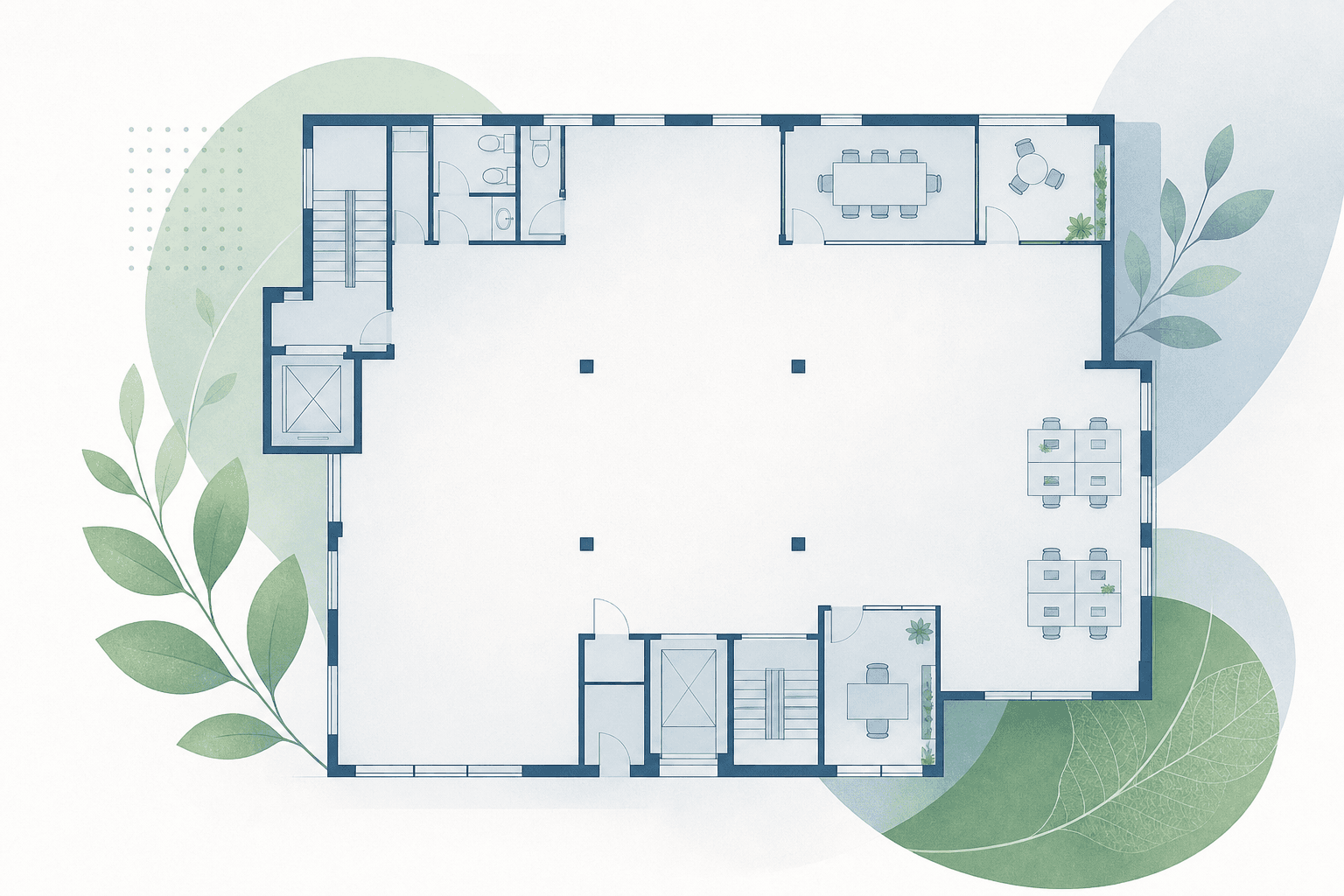
Empty offices are becoming one of real estate's biggest sustainability challenges. Cities keep growing and the need for smarter resource use is rising, yet large amounts of office space sit unused several days a week. Hybrid work and changing habits mean many companies no longer need the same footprint as before, but those spaces still consume energy, heating, and resources every day.
For a long time, offices were sized for everyone to be on site at once. Reality looks different now. Many workplaces are half full for most of the week while rent and operating costs keep climbing. That has pushed both tenants and landlords to question how offices are actually used and whether today's models are sustainable.
Certification is not enough if space sits empty
Sustainability conversations in real estate have focused on efficient buildings, certifications, and low-carbon materials. More people now recognise that how space is used matters just as much. A modern certified office delivers less value if large parts of the floor stay empty most of the time.
That is why interest in flexible and shared models is growing. Coworking, subletting, and office sharing are becoming common ways to cut both cost and climate impact. When several organisations share the same space, floors are used more intensively instead of standing idle.
The office as a meeting place
Views of what an office should be are shifting too. For many companies it is no longer about a fixed desk for every employee, but about environments for collaboration, meetings, and culture. Future offices need to be more adaptable – space that can scale up, be shared, or change quickly as needs evolve.
The industry faces a clear transition. Tomorrow's most attractive offices may not be the most central or the newest, but the ones used most intelligently. Sustainability is not only about building the right way; it is also about using what we already have far better.